2026-10-23
Tattoo Removal Cost & Timeline Guide: 3 Key Points to Know Before Removing Your Tattoo
A guide to tattoo removal covering how laser treatment works, typical session counts, costs and timelines, color-related difficulty, pain, and possible side effects.
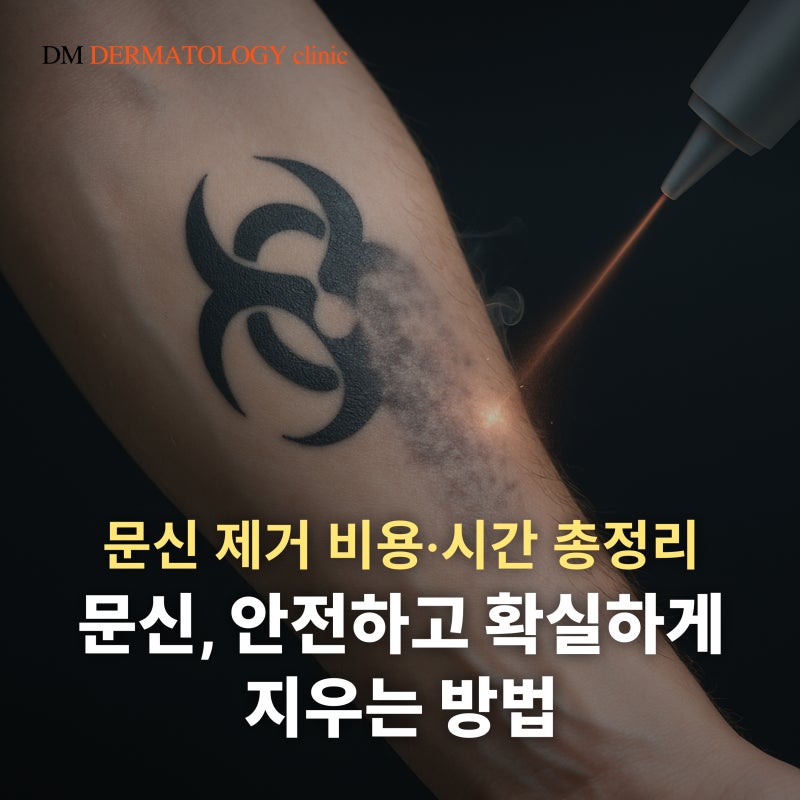
Tattoo removal cost, tattoo removal time
Hello! This is DM Dermatology Clinic :)
With the legalization of tattoos being discussed, getting inked is becoming increasingly mainstream. At the same time, a growing number of people want to erase their “regret tattoos.”
A tattoo is a decision made in an instant, but removing it is a long-term commitment.
It involves time, money, and pain. It’s important to remember that tattoo removal is not a simple cosmetic procedure, but a medical treatment that breaks down pigment deeply embedded in the skin.
In this post, we’ll cover the key information you need to know before removing a tattoo, from the science behind removal to costs, number of sessions, and pain.
How Tattoo Removal Works
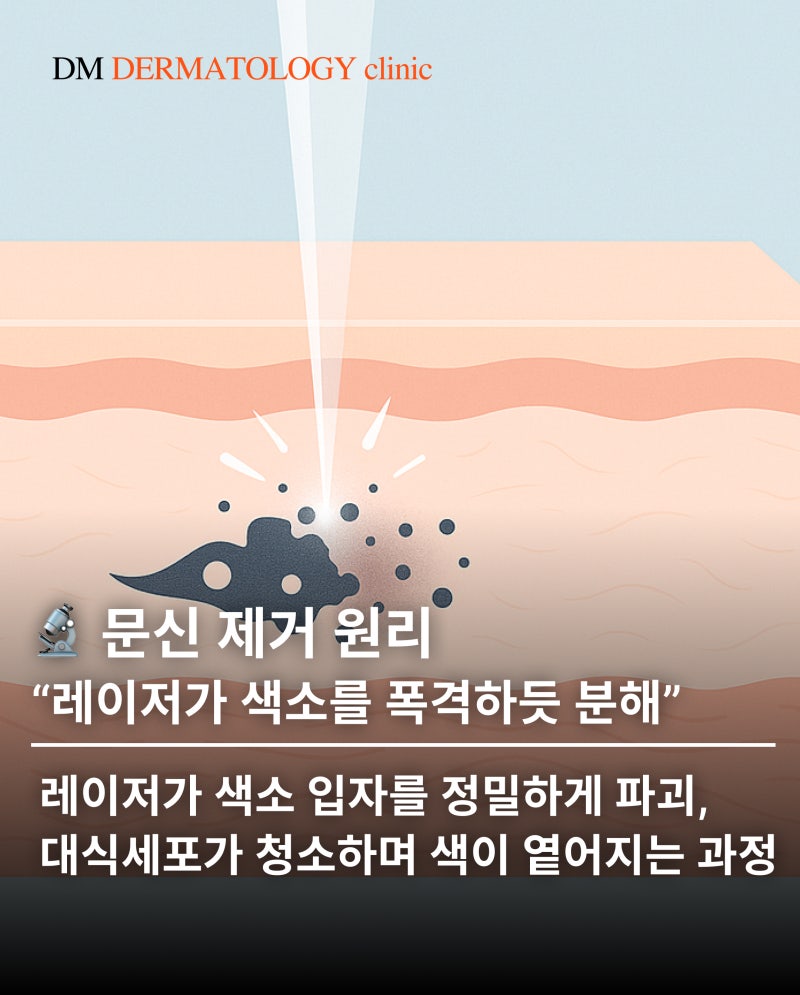
Tattoo removal lasers use a “precision light beam (laser light)” that reacts only with specific pigment particles.
When this light hits the pigment in the skin, it creates a powerful burst of energy. The pigment particles are finely shattered and then gradually cleared away by immune cells (macrophages).
*Here’s how tattoo removal works:
1. Chromophore targeting – The laser precisely locates the pigment.
2. Powerful energy impact – The pigment particles are shattered and broken down.
3. Immune response – Macrophages clear away the broken-down pigment.
4. Gradual fading – Repeated sessions progressively lighten the pigment.
In short, complete removal is rarely achieved in a single session. Instead, the tattoo gradually fades through repeated treatments.
Why Tattoo Removal Is Difficult #1

Staggering costs and long treatment times
Tattoo removal is never a quick process.
Depending on the depth, density, location, and color of the pigment, 10 to 20 or more sessions may be needed.
Standard tattoos: at least 10 sessions
Large-area tattoos (back, arms, legs): dozens of sessions
Full-body tattoos: each session takes 2–3 hours, with costs in the tens of millions of won
If sessions are spaced 4 to 6 weeks apart, the full course of treatment can take anywhere from several months to several years.
That’s why removing a tattoo takes far longer and costs much more than getting one.
Why Tattoo Removal Is Difficult #2

Difficulty varies by color — black is easy, color is hard
A tattoo’s color is a key factor in how difficult it is to remove.
Lasers only respond at specific wavelengths, so removal efficiency varies by color.
Black tattoos: Most lasers respond well, making them easier to remove.
Colored tattoos (red, green, light blue, etc.): Require color-specific lasers.
Special colors (mint, orange, etc.): Low response rates make them difficult to remove.
In short, the more colors a tattoo contains, the more types of lasers and sessions are needed, which drives up the overall cost.
Why Tattoo Removal Is Difficult #3
A procedure with a “burning” pain
Many people feel that removing a tattoo hurts more than getting one.
This is because the laser’s process of shattering pigment particles creates a “burning” sensation.
Pain level: Intense heat and stinging
Sensitive areas: Thin-skinned areas such as around the eyes, wrists, and ankles can be extremely painful.
Pain management: Topical numbing cream and sedation can be used in combination.
After treatment, temporary swelling, redness, and scabs may occur, so it’s important to follow your dermatologist’s aftercare instructions carefully.
Some Tattoos Can’t Be Completely Removed!

Tattoo removal may not always be 100% complete.
🔹 Depth – If the tattoo was inked too deeply, the laser may not reach it.
🔹 Pigment response limits – Certain pigments do not react to lasers.
🔹 Improper treatment – If the laser is set incorrectly, the pigment may not shatter.
Improper treatment can also lead to side effects such as bleeding, infection, scarring, and keloids.
For this reason, it’s safest to receive personalized treatment from a board-certified dermatologist.
A tattoo can be a beautiful form of self-expression, but removing it can take years, cost tens of millions of won, and involve real pain.
DM Dermatology offers laser treatment solutions tailored to your skin type and pigment condition.
Before getting a tattoo, it may be worth asking yourself once more: “What would the removal process involve if I ever decide to erase it?”
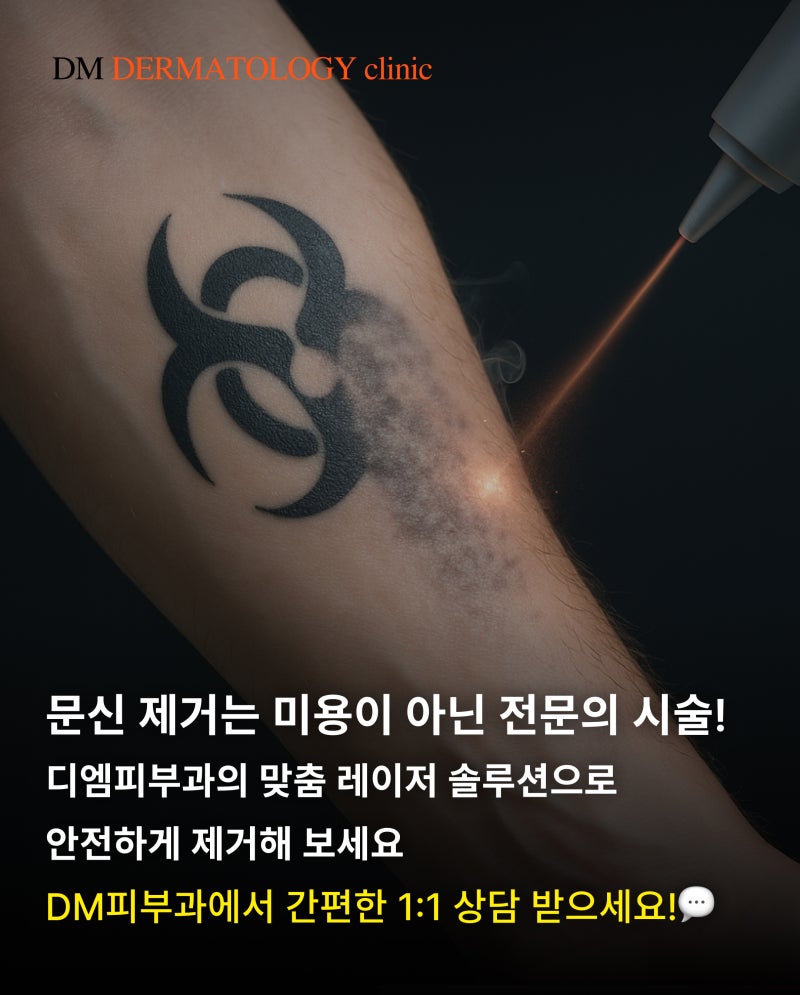
Getting a tattoo is an art, but removing one is medicine. We hope you make a decision you’ll never regret after consulting with a specialist.

Tattoo removal,
Twosome Place 4F, 100m from Apgujeong Station Exit 5
Get it taken care of at DM Dermatology!
Frequently Asked Questions
How many sessions does tattoo removal usually take?
Standard tattoos typically require at least 10 sessions, and complete removal in just one session is difficult. Large-area tattoos on the back, arms, or legs may need dozens of sessions, and the exact number depends on the depth, density, location, and color of the pigment.
How long does tattoo removal take?
With sessions spaced 4 to 6 weeks apart, the full treatment can take anywhere from several months to several years. Removing a tattoo takes far longer and costs more than getting one.
Is removing a black tattoo different from removing a color tattoo?
Yes, there is a difference. Black tattoos respond well to most lasers, making them relatively easy to remove. Colored tattoos in red, green, or light blue require color-specific lasers, and special colors such as mint or orange have low response rates, making them more difficult to remove.
How painful is tattoo removal?
Tattoo removal is typically accompanied by intense heat and stinging, and many people say it hurts more than getting the tattoo did. Thin-skinned areas such as around the eyes, wrists, and ankles can be especially painful. Topical numbing cream or sedation can be used in combination to help manage the pain.
What side effects can occur after tattoo removal?
Temporary swelling, redness, and scabs may appear after treatment. Improper treatment can lead to bleeding, infection, scarring, and keloids. It is important to follow your dermatologist’s aftercare instructions carefully.
Are there cases where a tattoo cannot be completely removed with a laser?
Yes, complete removal is not always possible. If the tattoo was placed too deep, the laser may not reach it. Certain pigments do not respond to lasers, and if the laser is not set correctly, the pigment may not break apart properly.